 Purpose and Identity Processes Lab
 · Cornell University
A sense of purpose can be cultivated.
The lab studies the correlates and consequences of having a sense of purpose, and the conditions that support its cultivation in everyday life.
Findings
What we are finding
Purpose predicts happiness, hope, and healthy behavior.
Across many of our studies, purpose is linked with greater happiness, hope, positive mood, and willingness to engage in healthy behaviors.
Purpose buffers everyday hassles and stress.
It can buffer or eliminate negative moods that arise from everyday hassles and socially challenging situations.
It even tempers extreme highs.
The benefits go beyond stress: purpose also helps curtail reactivity to extreme positive feelings after uplifting events or positive feedback on social media.
The when of purpose may matter as much as the what.
Sense of purpose fluctuates in daily life. Moments of greater felt purpose correspond with greater adjustment.
Current translational research initiative
Portraits of Purposeful Youth
An interactive translational initiative exploring youth purpose across personal, experiential, and contextual lenses. It examines how youth purpose is seen across a variety of roles and perspectives, drawing on developmental science, positive youth development, and identity research.
People
The team

Christopher Davis
PhD candidate, Developmental Psychology
Studies how control-related processes shape the onset and course of psychopathology.

Ravenel Davis
Third-year PhD student, Human Development
Researches how purpose develops in adolescence and its ties to narrative identity.
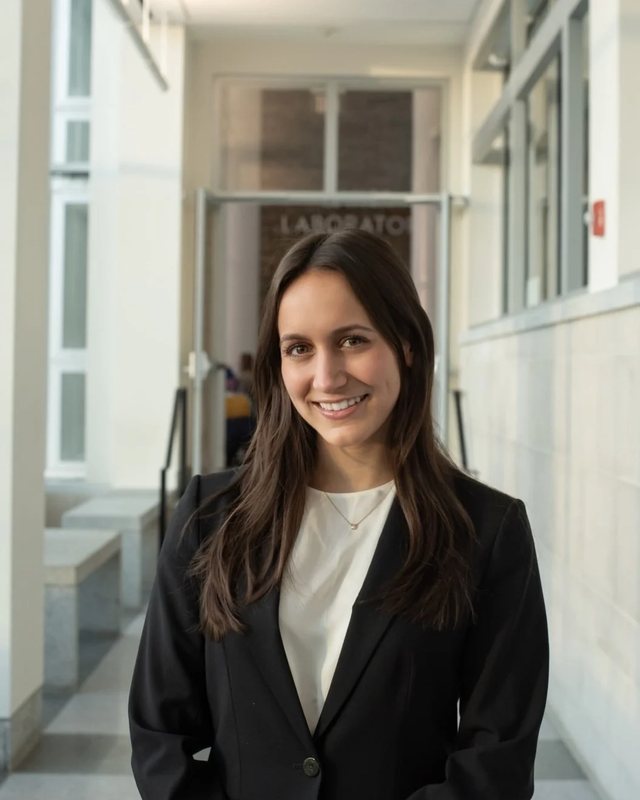
Emma Gould
Senior Lab Manager
Human Development senior interested in the intersection of psychology, business, and policy.

Maeve McCarthy
Junior Lab Manager
Studies how purpose connects to identity formation during adolescence.

Sophia Padilla
Undergraduate research assistant
Works on the Social Influence study, examining purpose's effect on social influence.

Adara Homer
Undergraduate research assistant
Focuses on adolescent development across law, mental health, and social media.

Nobel Zhou
Undergraduate research assistant
Runs an independent study on how a brief reflection intervention affects perceived control, stress, motivation, and state purpose.

Anthony L. Burrow
Principal investigator
I am a Professor in the Department of Psychology and Director of the Purpose Science and Innovation Exchange at Cornell University. I am also co-founder of Purpose Commons - the sister organization to PSiX - aiming to translate the science of purpose for the greater good.
My research focuses primarily on sense of purpose, with an emphasis on investigating its role in everyday experience and adjustment of young people. My work leverages developmental science and translational approaches, and I care deeply about integrating scientific methods with meaningful community-engagement to produce insights that advance knowledge and benefit people.
Research
Our current research
The Contribution Project ↗ (opens in a new tab)
An external youth-engagement initiative — visit contributionproject.org.
02Derailment
The inability to integrate past selves and directions with future ones — linked to depression, anxiety, and distress.
03Purpose & Goal Progress
Whether purpose shapes goal setting, sustained effort, and resilience — and is shaped by progress in turn.
04Perceived Control & Stress
The gap between the control people feel they have and the control they want, as a predictor of adjustment.
05Purpose Acquisition
Is purpose found, or built? Reframing it as a process that can be cultivated, not discovered.
06Affect-Moored Purpose
Whether momentary purpose and momentary positive affect rise and fall together, or move independently.
Contact
Ask the questions you are most interested in.
Whether it is this lab or another, we hope you find a space where you can. If it is ours, we would like to hear your question.
Questions about the lab, our research, or working with us? We would be glad to hear from you.
Address — Department of Psychology, Martha Van Rensselaer Hall, Cornell University
How to join
Postdoctoral researchers
Postdocs are typically recruited through a combination of supports provided by the PIP Lab and the Purpose Science and Innovation Exchange (PSiX) (opens in a new tab). If you are interested in a postdoctoral position, please reach out to PSiX.
Positions are always posted when we have an opening. When there is no posting, it typically means we are not recruiting.
Graduate students
The PIP Lab recruits graduate students on the typical fall semester cycle. If you are interested, please contact Professor Anthony Burrow to ask whether the lab will be recruiting students for the upcoming year.
Undergraduate students
Undergraduate research assistants work alongside graduate students on active studies, and some grow into roles such as lab manager. To be considered, please complete our application.